Flexible bidding is useful only when the business knows which conversions deserve flexibility.
I like testing broader bidding when the account already has clean value data. Without that, the system may chase easy conversions that do not pay back.
 audit mapROASSmart Bidding Exploration
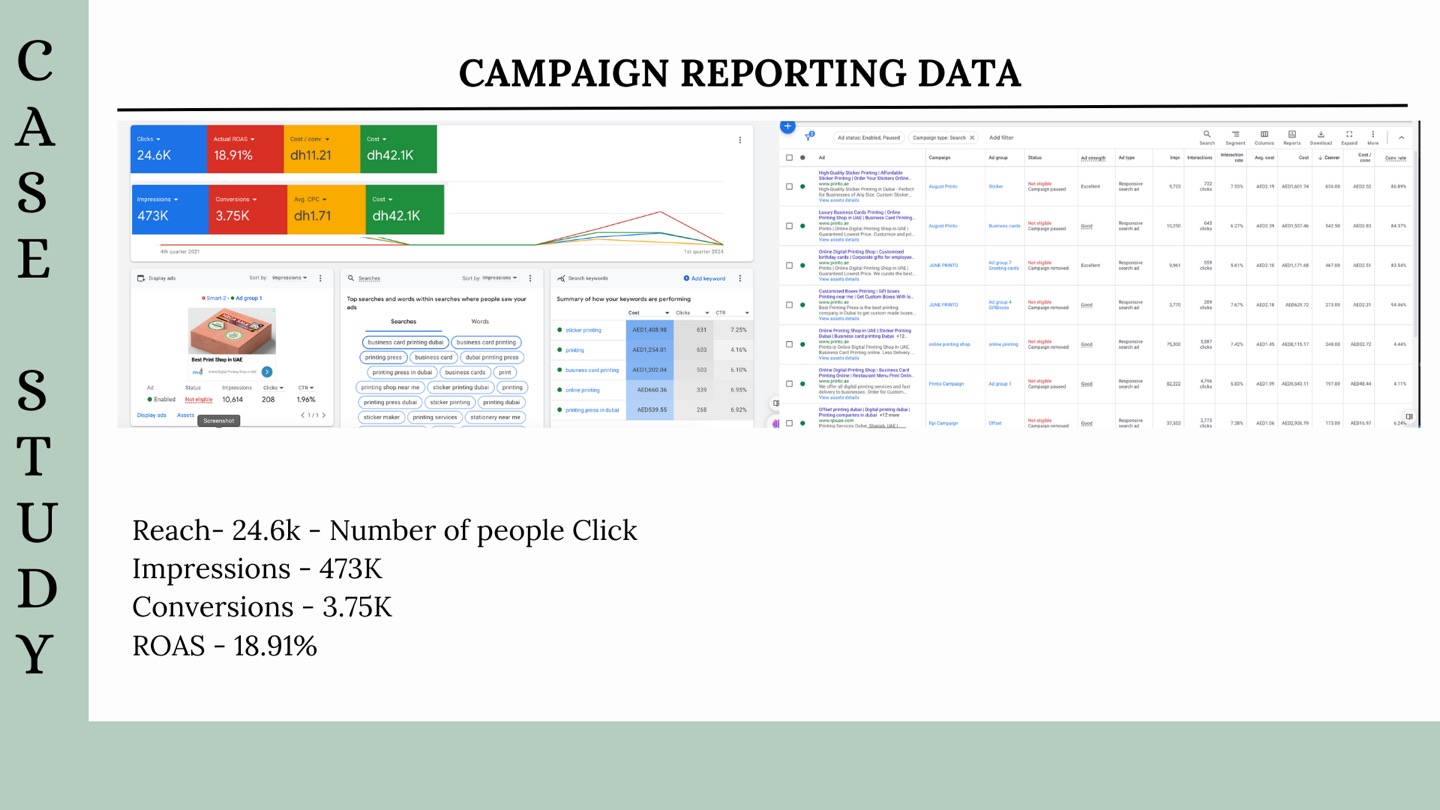
Real screenshots behind the recommendation
These are not stock visuals. Each image is pulled from Hammad Yousuf portfolio proof, campaign slides, certificates, or profile assets, then framed to support the logic of the article.
 Campaign proof
The first proof layer is the buyer signal: search term, creative angle, offer, and page fit.
Reporting proofThe second proof layer is whether the numbers explain what should happen next.
 Skill proof
The third proof layer is platform discipline: structure, tracking, bidding, and weekly decisions.
The proof standard I use before recommending action
I look for a visible chain: campaign input, buyer signal, page behavior, tracked outcome, and a next decision. If one link is weak, the recommendation changes. That is why each post includes metrics, proof visuals, and internal links back to services, portfolio, products, or booking instead of ending with generic advice.
Where I start the audit
I start with the business result, then work backward into the campaign. That keeps the review grounded. A clean account is useful only if it helps the founder understand spend, lead quality, revenue risk, and the next action.
For a topic like Smart Bidding Exploration, the first question is not whether the setup looks modern. The first question is whether the setup can produce decisions a real team can trust.
Metrics only matter when they create a decision
This metric is included because it changes the next decision. If it does not change a budget, page, offer, or tracking move, it does not deserve visual priority.
This metric is included because it changes the next decision. If it does not change a budget, page, offer, or tracking move, it does not deserve visual priority.
This metric is included because it changes the next decision. If it does not change a budget, page, offer, or tracking move, it does not deserve visual priority.
How I would apply this in a real account
The checks that matter most
- Confirm conversion value is not copied across every lead.
- Review product margin before loosening ROAS targets.
- Keep budget changes calm during the learning window.
- Compare new query categories with actual sales quality.
- Document the stop-loss rule before the test begins.
signal flowROASSmart Bidding ExplorationThe logic behind the recommendation
How I would turn this into execution
Audit the current state around Smart Bidding Exploration, then separate real buyer signal from reporting noise.
Create the smallest useful fix: campaign split, landing-page block, tracking cleanup, SEO section, or dashboard view.
Turn the insight into one next step: fix the account, rebuild the page, improve tracking, test the offer, or scale only after the signal is clean.
What I would not overcomplicate
I would not rebuild everything on the first day. I would protect what is already working, isolate the weakest signals, and fix the parts that are making the account learn from the wrong behavior.
Most improvements come from simple, disciplined work: clearer structure, cleaner tracking, stronger landing pages, better proof, and reporting that says what changed and why it matters.
Where this connects on my site
I use blog posts to support the commercial pages, not to sit alone. If this topic is relevant to you, the next useful step is usually a service page, proof page, product resource, or booking page.
result boardROASSmart Bidding ExplorationThe decision I want by the end
By the end of the review, the founder should know what to scale, what to pause, what to test, and what needs better data before more budget goes in. That is the difference between activity and strategy.
If you are comparing options, save this post and use it as a working checklist. A calm account review now is usually cheaper than guessing after spend has already gone up.